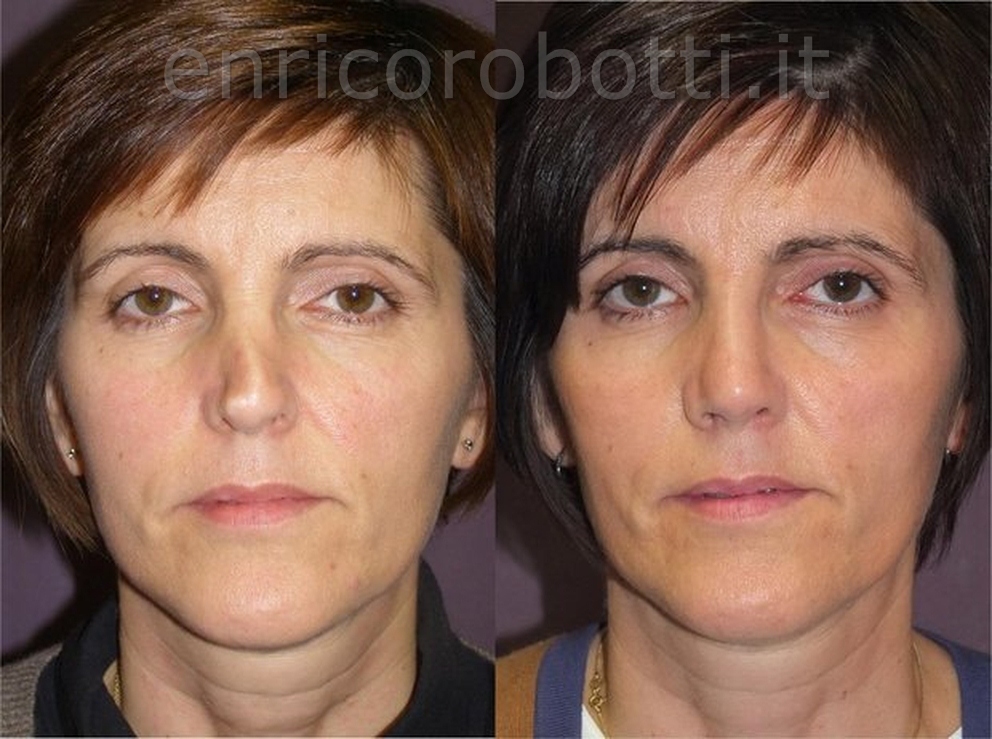
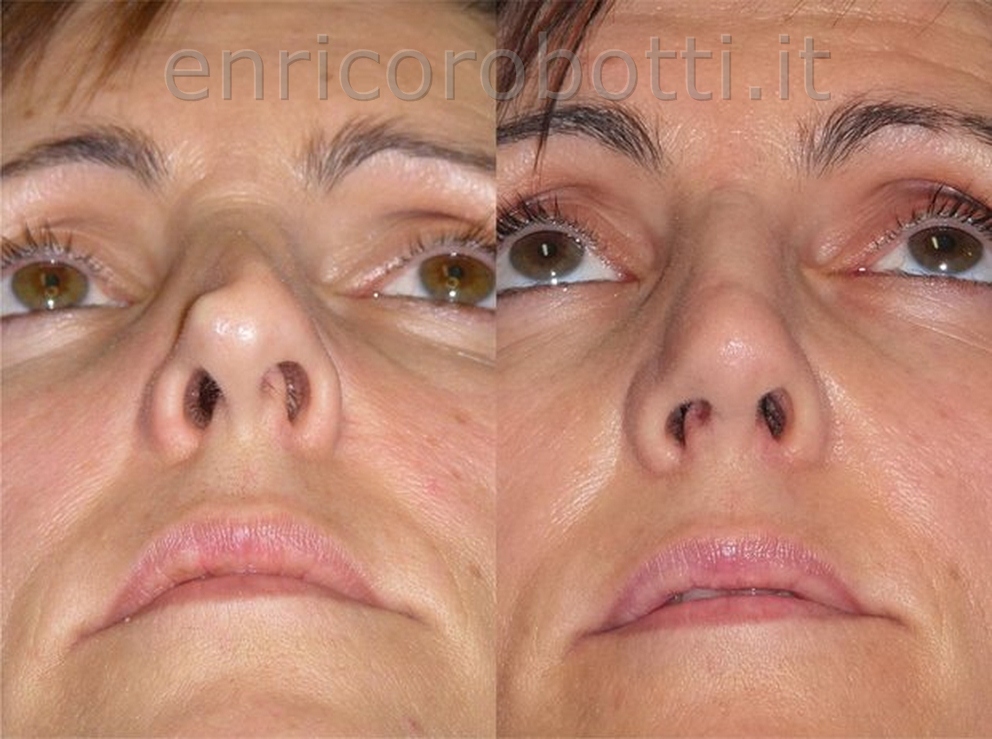
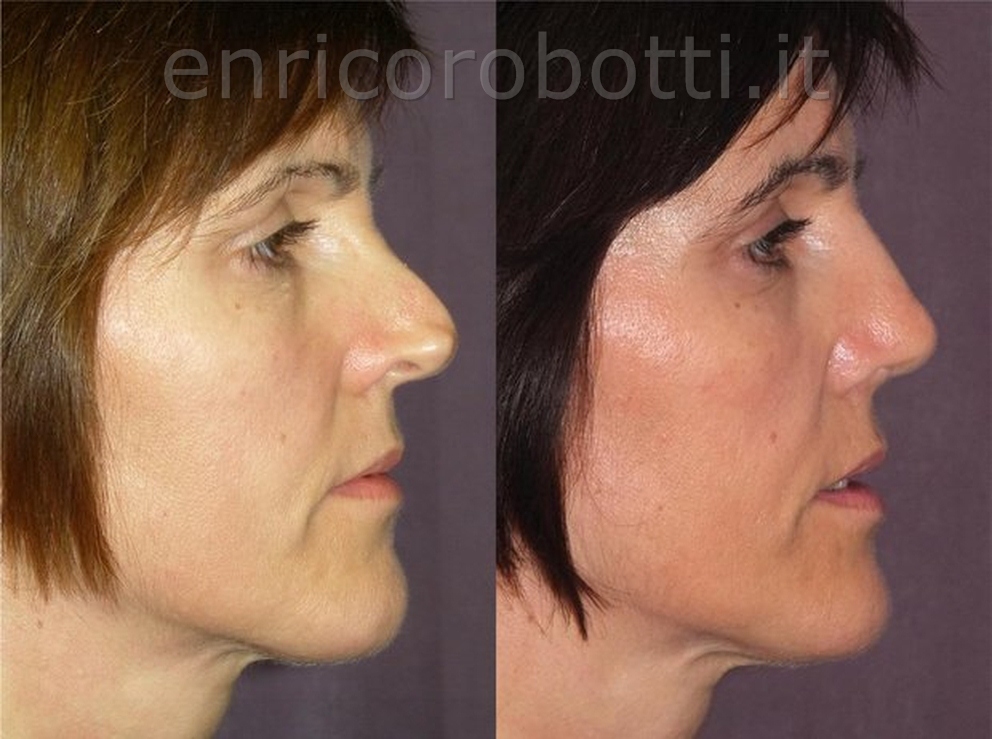
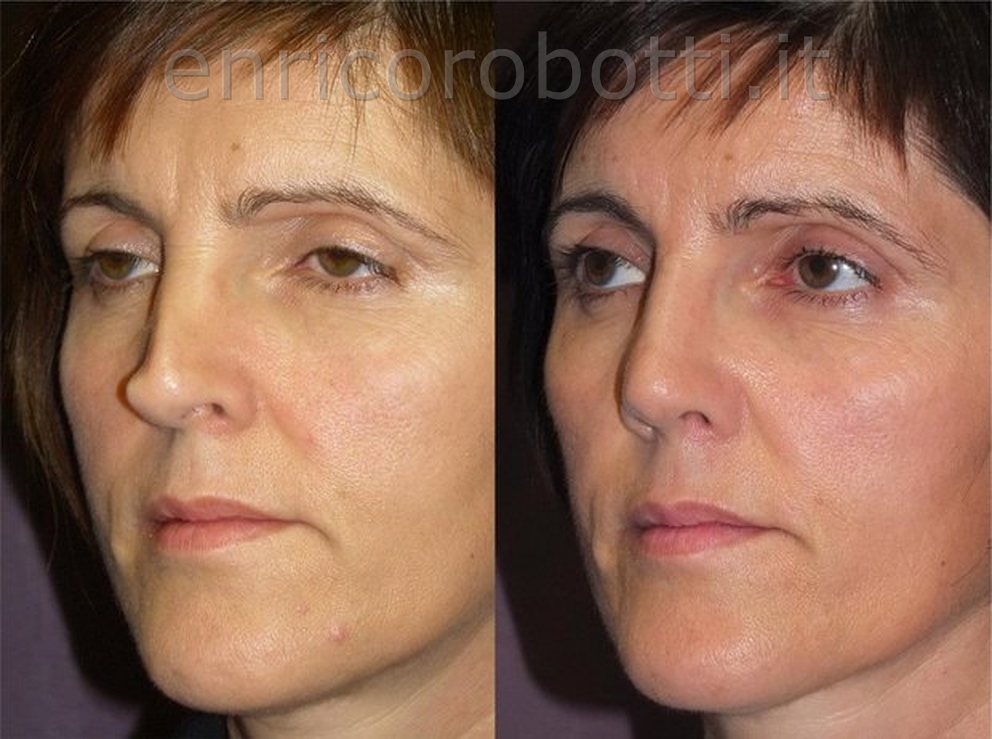
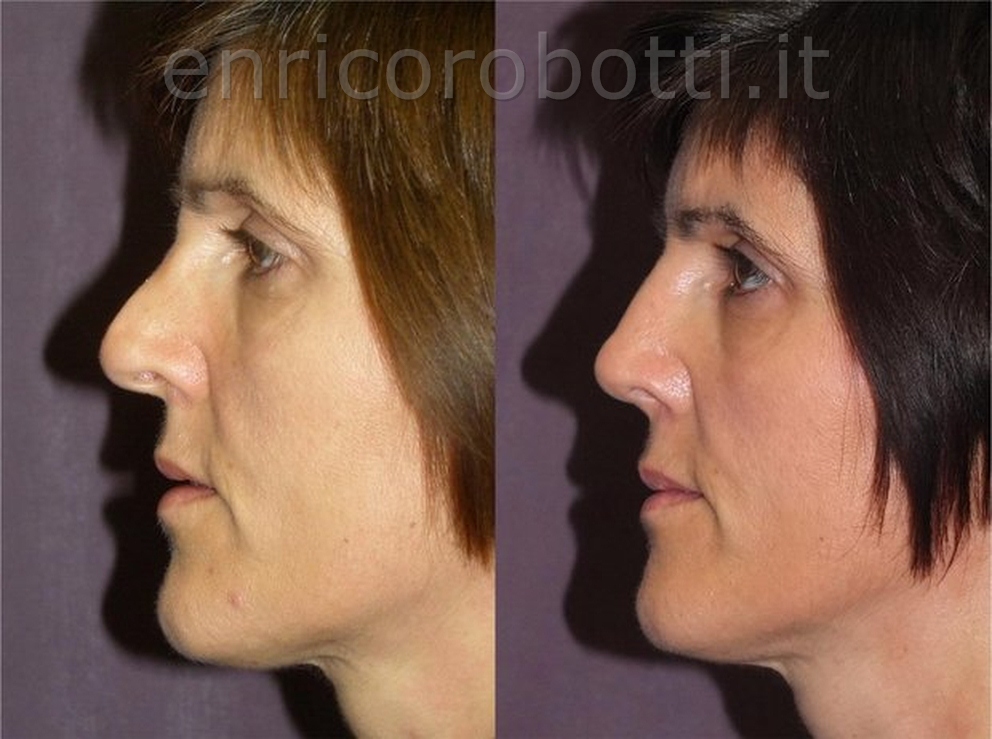
In this patient, who had previously undergone a closed technique, there is clear evidence of a complex pattern of coarse asymmetries and irregularities of the tip, related to erroneous cartilage resections. The obvious torsion is associated with a residual deviation of the nasal septum, never corrected, resulting in breathing impairment. The so-called “open roof” deformity is related to rasping of the original dorsal hump, without any subsequent osteotomies to close it. On profile view, the residual septum still appears excessively high. Here as well, a structural rhinoseptoplasty will be required, restoring, as far as possible, harmony and proportions between the structures that were omitted and those that were excessively resected. It will be necessary to symmetrize the tip cartilages and to re-establish more harmonious aesthetic lines of the dorsum. In such cases, it is usually not possible to correct every component of the damage and thus to return exactly to what might have been the appropriate result of a properly conducted primary rhinoplasty. Nevertheless, a substantial degree of improvement remains achievable. Rib cartilage harvesting will likely have to be considered, in addition to what is still available from the septum. The dorsum will be reconstructed, after bony symmetrization, with “diced” cartilage grafts (“diced cartilage fascia”) wrapped in temporal fascia, with dimensions measured very precisely. The postoperative photographs are at 12 months after surgery, and a certain amount of residual swelling is still visible, related to the use of costal grafts. This will continue to improve up to as much as 18 months after surgery.