• Meet Dr. Robotti
  • Papers
  • Gallery
  • Focus Rhinoplasty
  • Academy
Menu
Contacts
  • EN
    • IT
    • EN
Primary

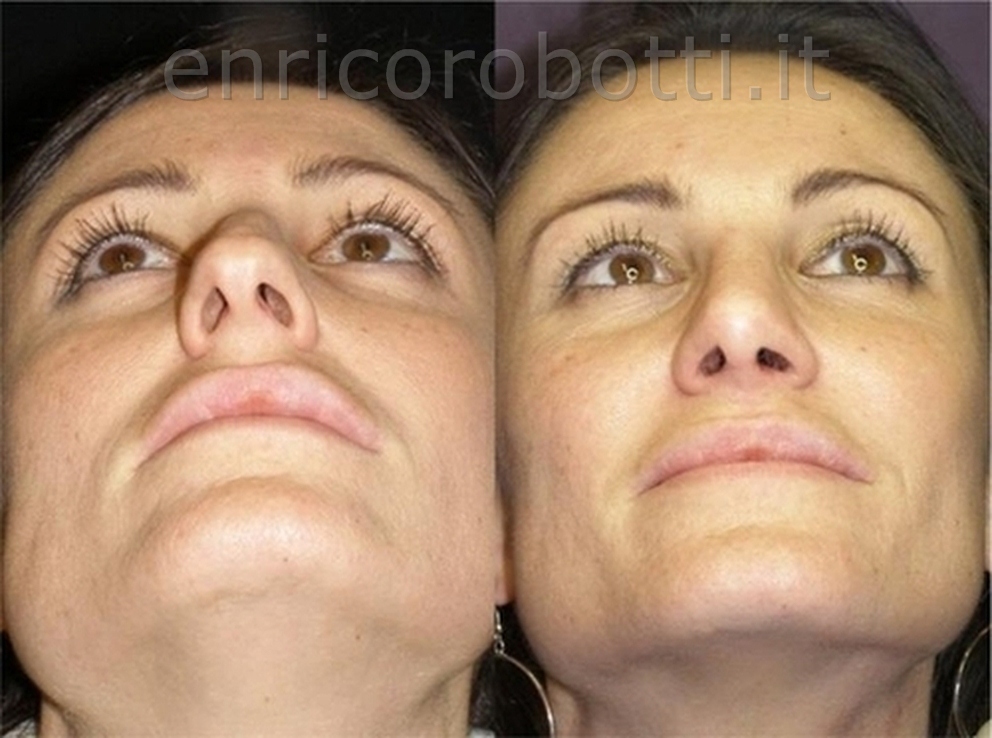
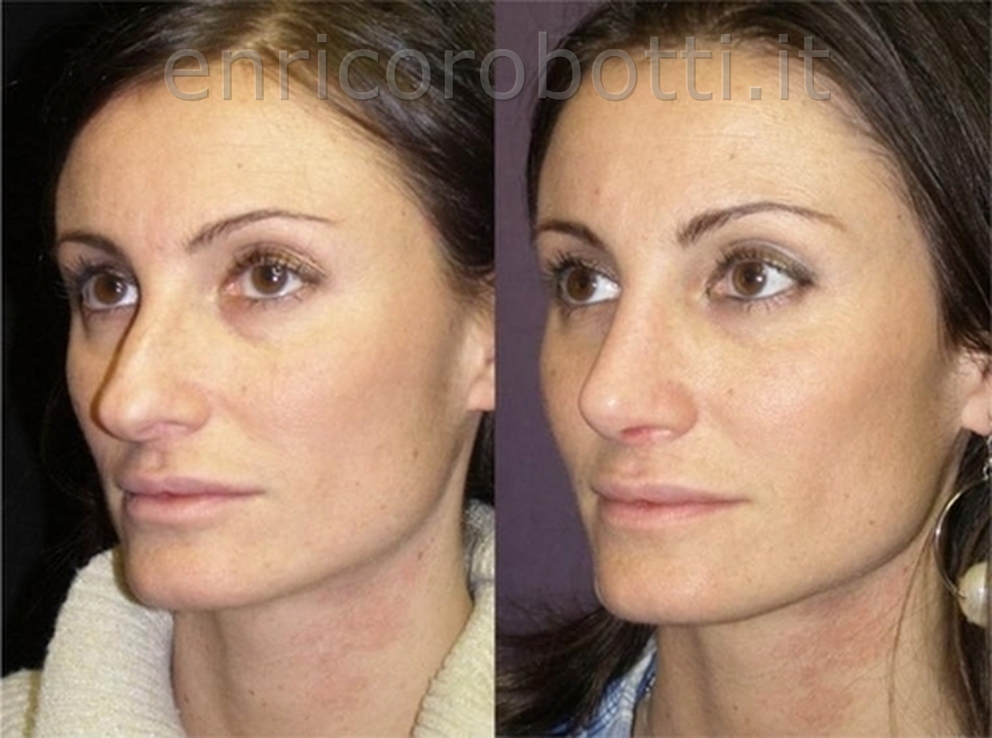
The nose is deviated to the right, with asymmetric dorsal aesthetic lines. The tip is bulbous, with a degree of central depression toward the columella, accentuated by the contour of the two tip cartilages (the domes), as is particularly evident in the three-quarter view. An osteocartilaginous hump (composed of bone and cartilage) is visible, associated with a certain degree of tip ptosis, which makes the nasolabial angle (between the base of the columella and the upper lip) slightly too acute and gives the impression of early “aging” in a face with otherwise excellent proportions. The patient, very precise in describing her expectations, desires correction of all these elements. This is again a case of a refined structural rhinoplasty, requiring careful balancing of the various components of the nose.
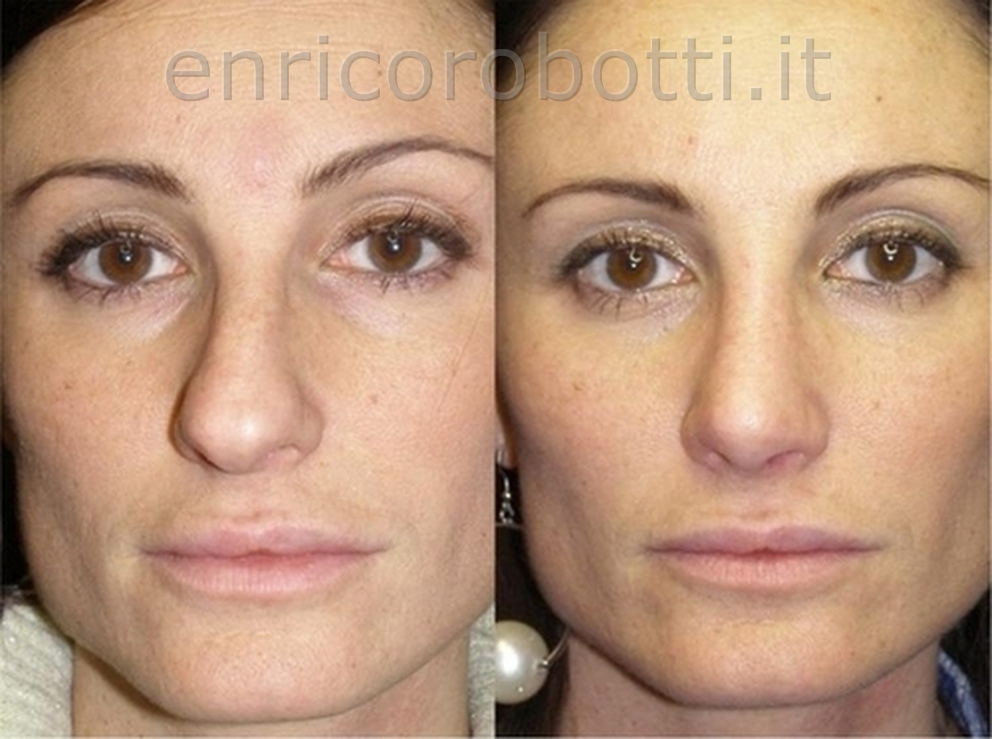
The dorsal lines were improved by narrowing the tip and correcting the deviation. The postoperative photographs were taken two months after surgery, by which time postoperative edema has resolved by more than 80%. Over the coming months, the result will continue to improve with the complete resolution of the residual edema.
The tip has been made more “triangular.” The distal (lower, near the columella) deviation of the nasal septum has been corrected. The scar at the base of the nose is already nearly invisible.
The profile is harmonious and natural, with a smooth dorsum and a tip positioned just slightly higher. In other words, the dorsum begins at the level of the eyelashes, continues with a minimal concavity up to the tip (the tip-break point), which ends a few millimeters above the dorsal line.
The three-quarter view is one of the most important perspectives for correctly judging the real outcome of a rhinoplasty. Very often, the profile alone—especially when postoperative photos are taken with angles that differ from the preoperative ones—can be misleading.
The central depression of the tip has been corrected. The tip now appears as the harmonious continuation of the dorsum. The new tip was crafted through precise suturing and the use of grafts harvested from the very bulbous upper portion of the tip that is clearly visible in the preoperative photographs.
In the top view, the harmony of the dorsal aesthetic lines has been restored and the deviation corrected.
Menu
  • Home
  • Meet Dr. Robotti
  • Papers
  • Gallery
© 2026 Enrico Robotti
P.IVA 03955080167

Privacy Policy
Cookie Policy

Design by Elidria
  • Home
  • Meet Dr. Robotti
  • Papers
  • Gallery
  • Focus Rhinoplasty
  • Robotti Rhinoplasty Academy
Contacts
xgriparrow-right4chevron-down5instagram3